
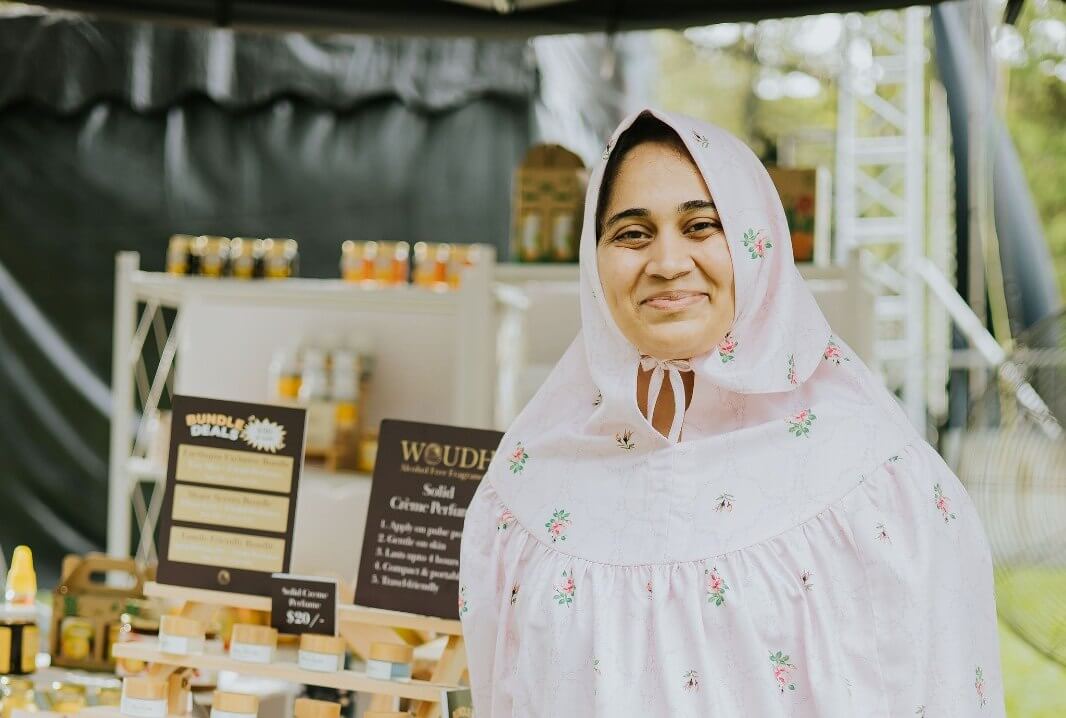
After years of writing for a living, Farida Haji left her full-time job and started WOUDH, a fragrance brand shaped by memory, family, faith and the quiet perseverance of starting again.
For much of her working life, Farida Haji made a living from words. She had been writing since she was in school, moving between poetry, prose, short stories and fiction before those words eventually began paying the bills through journalism, press releases, features, blogging, website content and copywriting.
Then, in June 2024, she decided to leave her full-time job.
There was no meticulously mapped-out entrepreneurial plan waiting for her on the other side. Instead, Farida faced a choice familiar to anyone at a career crossroads: put her energy into finding another job, or take that same energy and try to build something of her own.
“The effort of seeking another job and building something from scratch was on the same scale,” she says. “So I intentionally chose to build a business rather than a resume.”
That choice eventually became WOUDH, the fragrance business she runs today. Yet Farida does not describe the transition with the dramatic language often attached to career pivots. To her, it felt more organic. “This wasn’t a planned pivot. A solution and a source both showed up at my door. So I welcomed them in.”
In some ways, perhaps, she never really stopped being a storyteller. She simply found another medium.
From words to fragrance
Writing and fragrance may seem like completely different creative worlds, but Farida sees a natural connection between them. Both, she believes, have the ability to take us somewhere else.
“Words weave stories, so do scents,” she says. A fragrance can bring back a person, a place or a moment with startling clarity, sometimes before we even consciously understand why. It is this relationship between scent and memory that would eventually become central to WOUDH.
The beginnings of the business were far less deliberate. Farida had long been an itr user, a ritual that had been part of her home since childhood. When her children began asking for perfumes of their own, she was hesitant about inexpensive alcohol-based fragrances and found herself remembering the perfume alternatives she had encountered during Hajj in 2022. “I think that’s where the seed was sowed,” she says.
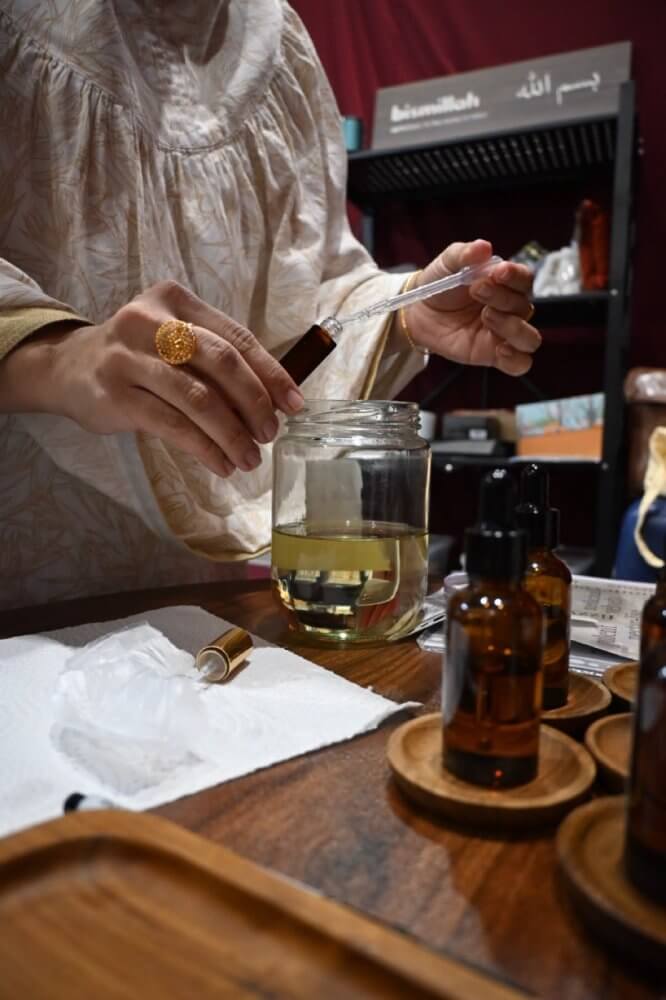
What followed was experimentation at home, often with her child beside her. They tried things, got things wrong, and, when there was extra, shared what they had made with family and friends. Farida laughs at the memory of those early attempts: “We messed up a lot.” But the response from those around them suggested there might be something worth pursuing. Encouragement came not only from friends but also from family members with expertise in fragrances and their by-products, giving her the confidence to take what had been a small home project more seriously.
One of the first fragrances she eventually shortlisted for her Extrait De Parfum Spray range was No. 5, a combination of rose and Oudh. Rose carries the memory of her beloved grandmother; Oudh is a scent Farida has loved for years. The pairing of something tender and nostalgic with something deep and familiar became particularly meaningful to her, and No. 5 has since become one of WOUDH’s bestsellers.
“So, at the core of WOUDH, it’s longing and memories,” she says. “Appreciating what we had and have, till it lasts.”
The meaning behind WOUDH
Even the brand’s name carries layers of meaning. WOUDH is a play on “wood” and Oudh, the fragrant oil derived from agarwood. Farida had been an Oudh lover long before she understood much about where it came from, but learning about the agarwood tree changed the way she thought about the scent.
The story behind Oudh, she says, is not necessarily a rosy one. What resonated with her was the patience and transformation involved before the tree produces the resinous wood from which the oil is derived. She began to associate it with healing, longing and what she describes simply as “quiet perseverance”.
There is an obvious parallel with entrepreneurship. Businesses, careers and lives rarely unfold in perfectly straight lines. They require patience, adjustment and the willingness to continue even when the outcome is uncertain. “WOUDH in essence represents fragments of life that linger even after the moment has been lived,” Farida says.
She is equally deliberate about what she does not claim to be. Farida is not a perfumer or a “nose”, and she does not formulate the perfume notes herself. Instead, she procures and curates its blends according to how she experiences them: scents that remind her of home, places, moments, and nostalgia.
That is where the writer in her reappears. The storytelling is not necessarily in creating the fragrance itself, but in recognising the emotion around it and giving that emotion a language.
Building a brand without chasing the noise
The fragrance business is crowded, particularly for a small home-based entrepreneur trying to carve out an identity alongside more established names. Yet Farida’s attitude towards competition is refreshingly unguarded.
She readily acknowledges that others in Singapore’s fragrance industry have more experience and technical knowledge than she does. Some are people she knows and learns from, and she does not regard their success as something she needs to compete against. Instead, her attention is on making the WOUDH experience distinctly her own.
“I am not trying to sell a trend that disappears or evaporates in thin air,” she says. She wants a scent to mean something to the person wearing it, to become associated with a memory and eventually feel like something worth keeping close.
That philosophy extends beyond the fragrances themselves. Branding and packaging were among Farida’s biggest early investments and, by her own admission, among the scariest. She went “all in” on the brand’s design, colours and materials, but resisted the temptation to equate premium presentation with oversized packaging.
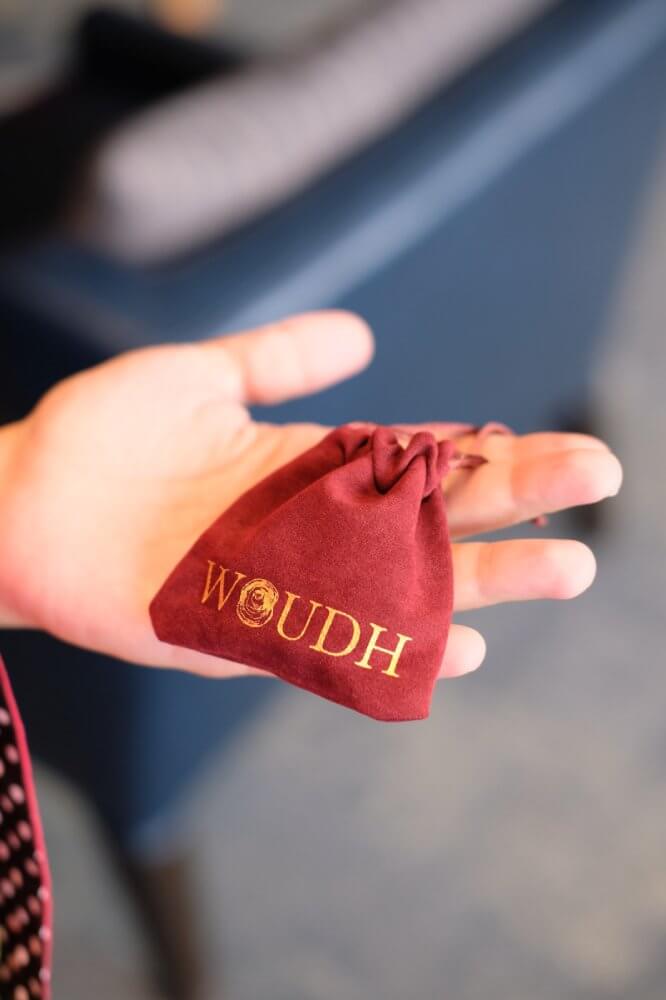
Instead of boxes, she chose pouches. Part of the decision was practical: as a small business, she needed to think about inventory and storage. But the choice also gave the packaging a life beyond the purchase. Customers could reuse the pouches rather than simply throwing them away.
For all the thought she puts into presentation, however, Farida’s favourite part of building the brand happens away from the packaging and social media feeds. It happens at markets, when she gets to place a fragrance in front of someone and watch their reaction.
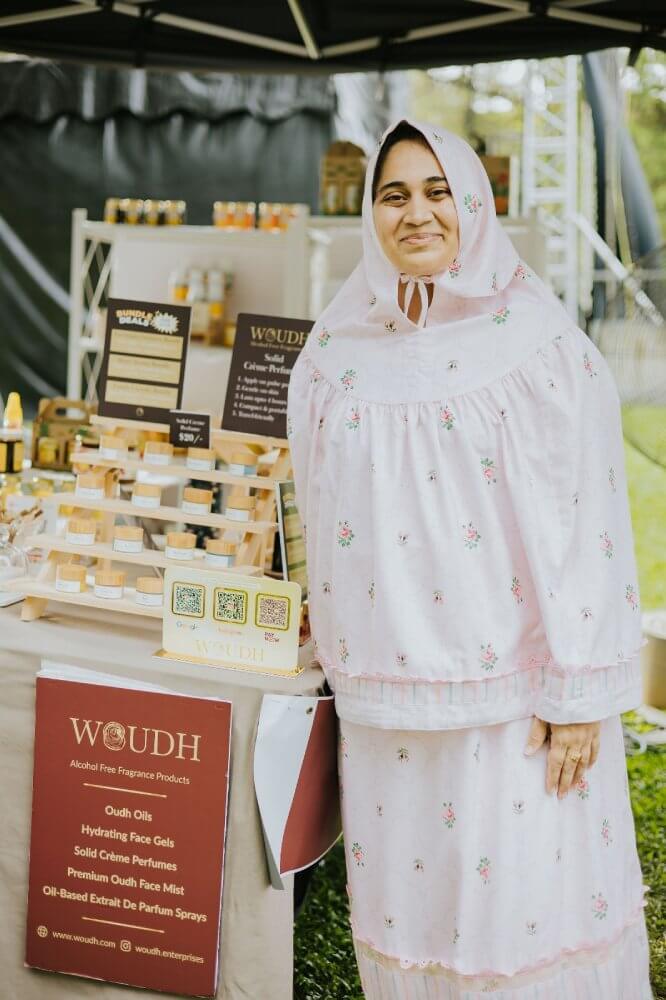
She describes the experience almost like a writer watching someone read her work. A person smells something and, for a split second, enters a world of their own. Memories surface. Stories emerge. Sometimes a scent simply makes them stop.
For Farida, that is where fragrance becomes more than a product.
When business becomes very quiet
There is, of course, another side to entrepreneurship, one that rarely looks quite as beautiful as a carefully styled bottle of perfume.
April and May this year were particularly difficult months for Farida. There were moments when she genuinely questioned whether she should continue with WOUDH. Some days were overwhelmingly busy; others were unnervingly silent. She found both uncomfortable.
“Running a business really means running it,” she says. “You can’t brisk walk it and you can’t race it either. There has to be a consistent pace that can keep you sane.”
It is perhaps one of the more revealing things she says about entrepreneurship. Starting a business can be exciting. Sustaining one requires something different: learning how to keep going when there is no immediate reassurance that the effort will pay off.
Farida has learnt to live with that uncertainty rather than pretend she has conquered it. Faith plays an important part in how she navigates those periods. “We keep faith, we trust in Allah, and we wake up with a positive thought of working hard,” she says. “The reward shall arrive, when it has to.”
Perhaps that is where the idea of “quiet perseverance” becomes more than simply a beautiful brand philosophy. It is also how she is learning to run the business.
A little calm in the chaos
Of all the fragrances she carries, Gold Oudh in her solid perfume range is among the most personal. Oudh, for Farida, represents quiet richness and cultural familiarity, but it is also something she turns to when life becomes noisy.
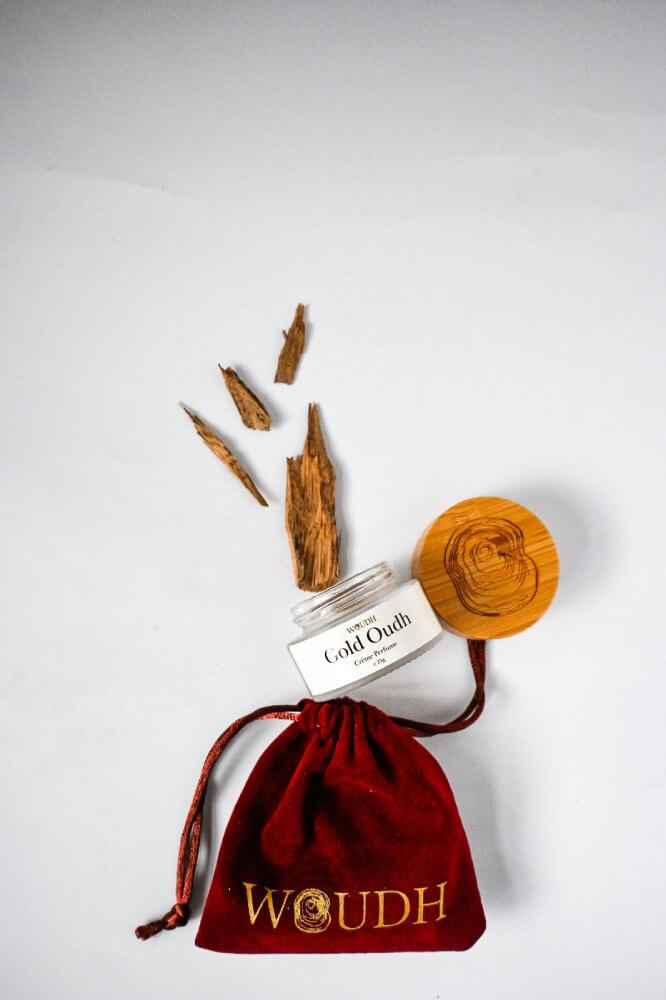
She does not wear it every day. It comes out on the heavier ones, when her mind is racing and her body feels restless.
“Applying Oudh feels like being grounded. Close to myself, my Maker,” she says.
It is a small ritual, but one that reveals something about what Farida ultimately wants WOUDH to represent. She is not trying to create fragrances that enter a room before their wearer does. Nor does she want someone to buy a bottle simply because it happens to be fashionable at that moment.
She wants fragrance to be used intentionally.
That could mean a Muslim woman who enjoys perfume but is conscious about wearing stronger scents, a parent looking for fragrance choices for a teenager, a man who has always loved Oudh, or simply someone who enjoys the comfort that a familiar scent can bring.
And perhaps that is where Farida’s old life as a writer and her new one as an entrepreneur meet most naturally.
For years, she used words to make people feel something. Today, she is trying to do much the same with fragrance.
She does not necessarily need WOUDH to shout for attention. She would rather a fragrance quietly accompany someone through their day, become attached to a person or a place, bring back something that had almost been forgotten, or perhaps become part of a memory that has yet to be made.
More than anything, she wants someone to encounter a WOUDH scent and feel familiarity, comfort and connection.
“A fragrance doesn’t always have to demand attention,” Farida says.
“Sometimes, it can simply feel like home.”
Connect with Farida Haji on LinkedIn