From AI and digitalisation to regional trade and women entrepreneurship, the opportunities across ASEAN are growing. The bigger question is whether SMEs are ready to turn them into business.
By Kartina Rosli, Board Member, SMCCI/ Vice-Chairman, DEWI-SMCCI
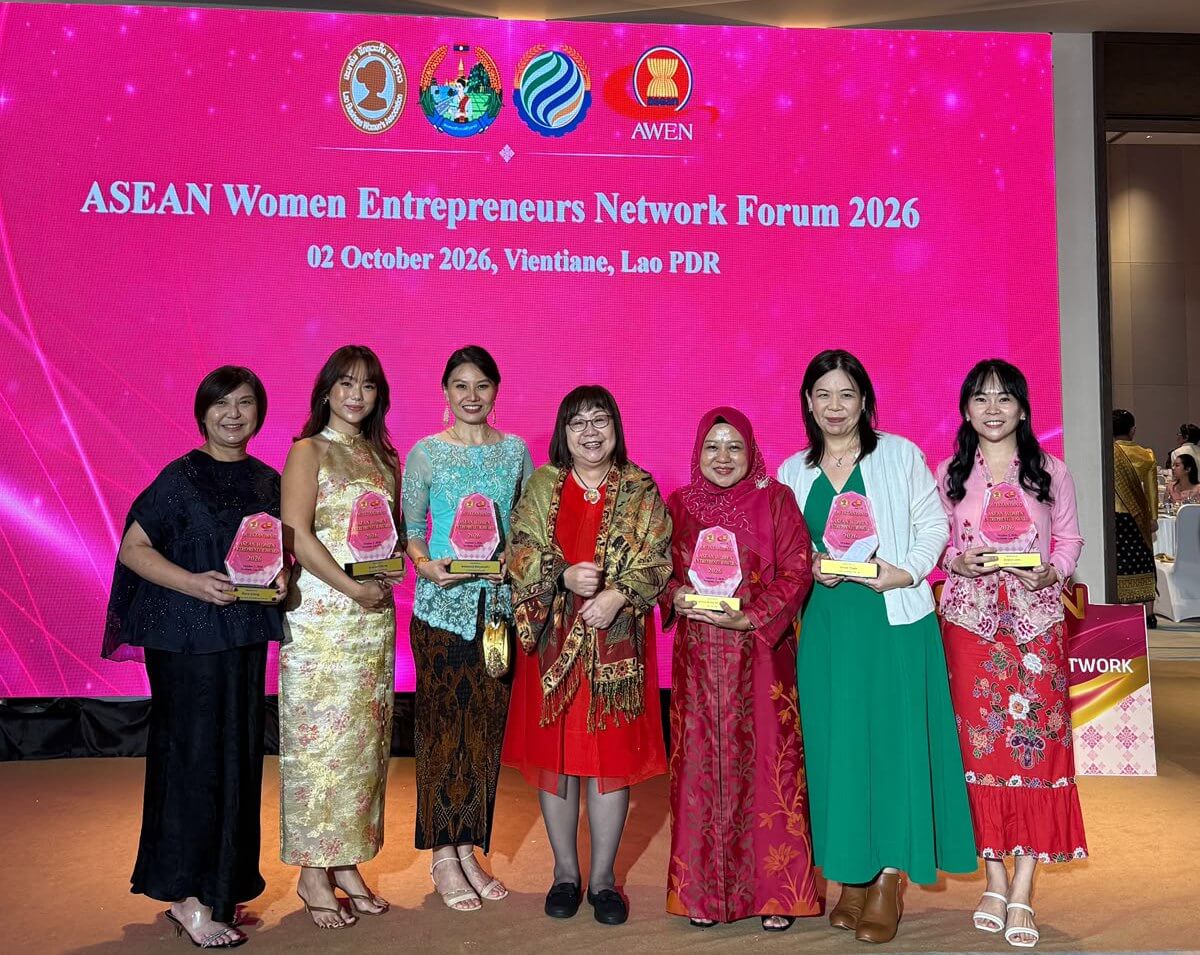
Sitting at the ASEAN Women Entrepreneurs Network (AWEN) Forum in Vientiane, Laos earlier this October and listening to speakers from different countries discuss about artificial intelligence, digitalisation, cross-border trade and the future of women entrepreneurs, I found myself thinking about the SMEs I work with back home.
Many are already trying to keep up. There is always another platform to be on, another piece of technology to adopt, another marketing trend to follow and, increasingly, another AI tool promising to transform the way we work.
The conversations in Vientiane were optimistic about what lies ahead for ASEAN, and rightly so. Yet one question stayed with me throughout the forum: with all these opportunities opening up, are our SMEs actually ready to make something of them?
Having access to more technology, markets and connections does not automatically translate into growth. Sometimes, without a clear direction, it simply gives businesses more things to do.
Start with the Problem, Not the Technology
AI was inevitably a major part of the conversation. Its potential for SMEs is significant. It can analyse information, automate repetitive tasks, identify patterns and allow small teams to accomplish work that once required considerably more manpower.
What interested me more was the discussion around moving from understanding what is happening in a business to understanding why it is happening.
A dashboard can tell an owner that sales have declined. AI can analyse the data and identify patterns. Deciding whether the real problem is pricing, positioning, customer experience, the product itself or simply the wrong market still requires judgement and context.
The same applies to marketing.
An SME today can be on Facebook, Instagram, TikTok and LinkedIn, advertise on Google and Meta, run email campaigns, maintain a website, use a CRM and subscribe to several AI tools. It can look like a sophisticated operation while producing little meaningful business impact.
Activity can easily be mistaken for progress. The more useful question is not “Which technology should we adopt?” but “What problem are we trying to solve?”
ASEAN Is Not One Market
Regional expansion was another recurring theme at AWEN.
ASEAN offers an increasingly connected marketplace, with digitalisation and initiatives such as the ASEAN Digital Economy Framework Agreement creating new possibilities for cross-border business.
For an ambitious SME, the idea of expanding across ASEAN is understandably attractive. The reality requires more thought.
ASEAN is not one homogeneous market. Singapore, Malaysia, Indonesia, Vietnam, Thailand, Laos and the Philippines may belong to the same regional grouping, but customers behave differently. Price sensitivity, language, culture, purchasing habits and even the way trust is built can vary considerably.
A proposition that works in Singapore may need to be repositioned elsewhere. The marketing channel that performs well at home may be less relevant in another country.
The discussions on inclusive trade also highlighted the barriers facing women-owned businesses. Financing, networks, digital capabilities and market access continue to affect their ability to scale despite the important contribution these businesses make to employment.
Regional integration can open doors. SMEs still need to know which doors are worth walking through.
Beyond the Business Card
One presentation that stayed with me was The Power of the Pack: Building Profitable Networks Across ASEAN Borders delivered by Rosemarie Rafael, AWEN Philippines Focal Point.
Six qualities were highlighted for successful regional relationships: Character, Commitment, Connectedness, Communication, Culture, and Courage.
It made me think about how we network.
We attend conferences, exchange business cards, scan QR codes, connect on LinkedIn and return home with more contacts. Too often, nothing happens afterwards.
For an SME looking at another ASEAN market, the right relationship can be enormously valuable. A trusted local contact can explain the market in ways months of research cannot. The right introduction can lead to a distributor, partner, customer or collaboration.
The value of networking is therefore not how many people we meet. It is what happens after we meet them and this was emphasised again in my morning conversations with Irene Boey, Singapore Focal Point and Chairperson of ASEAN Women Entrepreneurs Network (AWEN and Chairperson of Research & Advocacy of SG-WEN
Women Entrepreneurs Need More Than Inspiration
The forum celebrated women entrepreneurs, and that recognition matters. Seeing women succeed can change what others believe is possible.
Still, inspiration alone does not build businesses.
Women entrepreneurs need financing, market intelligence, digital capabilities, mentorship, customers and access to regional networks. This is where organisations supporting SMEs have an opportunity to make a greater difference.
In Singapore, the Singapore Malay Chamber of Commerce and Industry (SMCCI) has played an important role in connecting businesses to expertise, partners, and regional opportunities. Our DEWI, its women entrepreneurship platform, has, over the years, helped women move beyond capability-building towards commercial outcomes.
A workshop should not necessarily end when the workshop ends. It could lead to mentorship, business matching or an introduction to a potential regional partner.
Success can then be measured differently. Did an entrepreneur gain a customer? Enter a new market? Improve her business? Did an introduction eventually become a contract?
That is where empowerment begins to translate into economic impact.
Strategy Before Activity
The conversations in Laos also reinforced something I have increasingly seen in my own work: SMEs do not always need to do more. Sometimes they need to become clearer about what deserves their attention.
A business may not need five social media platforms. Two with the right audience could be enough. Another advertising campaign may not solve anything if leads are already coming in but nobody is following them up effectively. Entering three ASEAN markets may sound impressive, while focusing on one where genuine demand and relationships already exist could produce better results.
This is where a Marketing Advisor or Fractional CMO can be useful, particularly for SMEs that may not require a full-time senior marketing leader.
The role is not simply to recommend another campaign. It is to connect marketing decisions to business objectives: which customers to pursue, how the business should position itself, where to invest and what it should stop doing.
My own work through Tin Communications has increasingly moved in this direction. The conversation is less about “What should we post next month?” and more about “What are we trying to achieve, and what is the smartest way to get there?”
Execution remains important. Strategy determines what deserves to be executed.
Turning Opportunity into Impact
I left Vientiane optimistic.
Technology is giving smaller businesses capabilities they could never previously afford. Digital commerce is making borders easier to cross, while networks such as AWEN are creating connections across the region.
Organisations such as SMCCI and DEWI can help build the bridges. Marketing advisors can help businesses decide which bridges are worth crossing. Ultimately, however, SMEs themselves must have the clarity and courage to take that next step.
Perhaps that was my biggest takeaway from Laos. ASEAN does not lack technology, networks or opportunities. The challenge is connecting them and turning learning into capability, connections into partnerships, marketing into demand and regional access into sustainable business.
As ASEAN becomes more connected and the tools available to SMEs become more powerful, perhaps we should stop asking “What opportunities are out there?”
The better question may be: “What are we going to do with them?”